
How to install the CyberVent main unit is a common question among homeowners considering a centralized fresh-air ventilation and air filtration system. Unlike standalone air purifiers placed in individual rooms, the CyberVent main unit is permanently installed in a suitable location within the home and connected to a ductwork system that distributes air throughout different areas.
Depending on the building layout and the number of rooms to be served, the position of the main unit, supply and return air ducts, and air vents may vary. Proper installation helps ensure that the system can supply fresh air, filter indoor air, and manage air quality consistently across multiple areas of the home.
So, how to install the CyberVent main unit, where should it be placed, and how should the ductwork be arranged? The following guide explains the key installation considerations step by step so homeowners can better understand the system before implementation.
What Role Does the CyberVent Main Unit Play in the System?
CyberVent Main Unit – The “Heart” of the Entire System
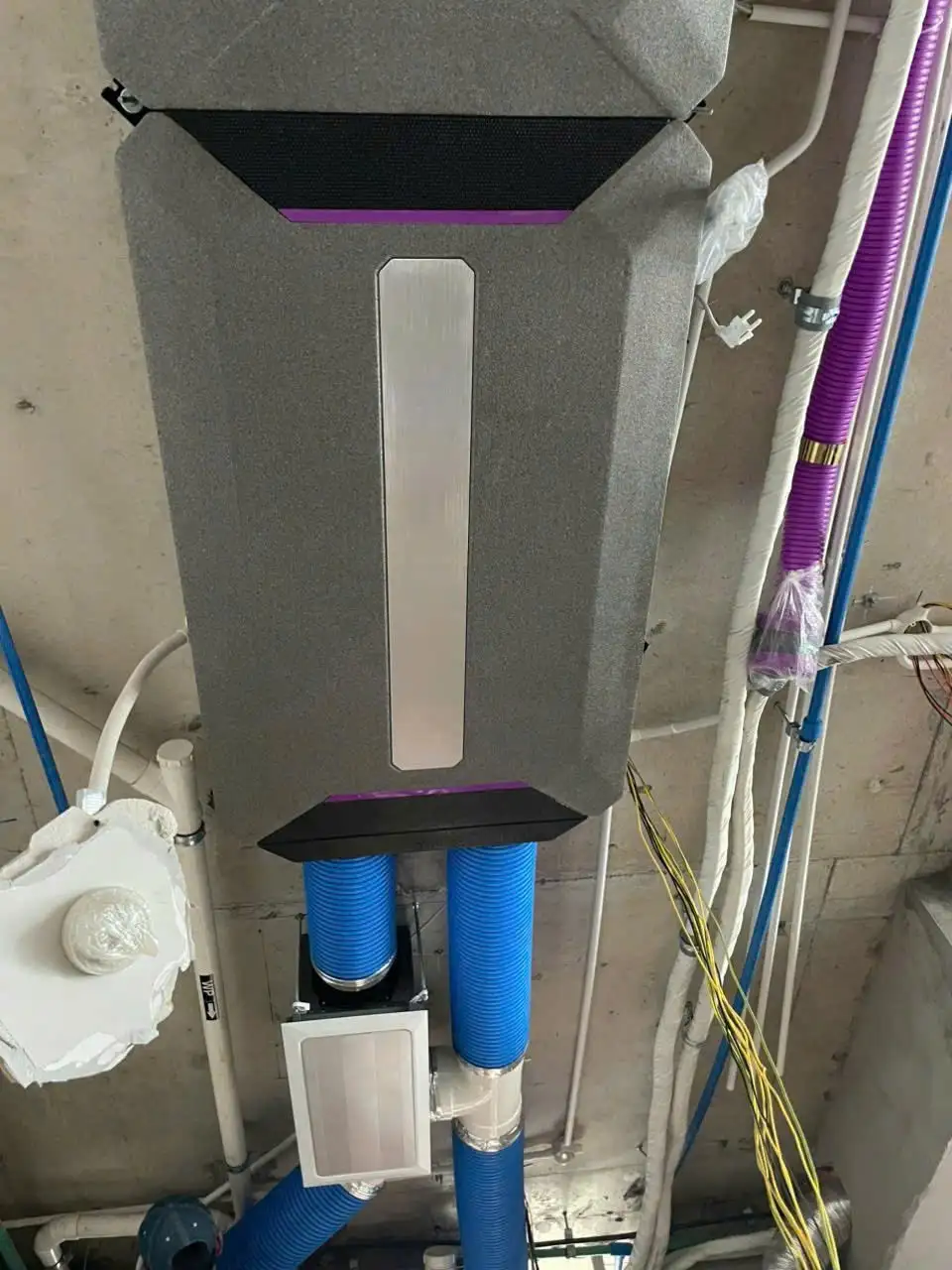
The CyberVent main unit can be considered the “heart” of the entire system, serving as the central component for heat exchange, airflow management, and energy recovery. Inside the unit are two EC motors from EBM Germany, positioned at opposite ends, together with two polymer heat-exchange cores located in the center.
The main unit transfers heat between indoor exhaust air and incoming outdoor air, helping balance air temperature before fresh air is supplied to the living space. The system offers a heat-exchange efficiency of up to 86%.
One of the key technologies used in CyberVent is PITSS (Power Impedance Temperature Symmetry System), which focuses on three main principles: Power Symmetry, Impedance Symmetry, and Temperature Symmetry.
Rather than managing airflow at only one individual device, this design aims to balance the entire ventilation system, including fan capacity, duct resistance, and temperature differences between different areas of the home.
Key Functions of the CyberVent Main Unit
- Fresh-air supply and air extraction: Creates stable supply and return airflow to maintain continuous air circulation throughout the home.
- Heat recovery and energy reuse: The heat-exchange core recovers energy from return air, with a stated efficiency of up to 86%, helping reduce unnecessary energy loss.
- Balanced airflow distribution: PITSS technology helps balance fan output and duct resistance so that air can be distributed more evenly.
- Reduced load on the air-conditioning system: Incoming fresh air undergoes heat exchange before entering the room, helping reduce temperature differences and supporting more efficient air-conditioning operation.
- Reduced noise and vibration: The metal housing combined with EPP material helps provide thermal insulation, reduce sound transmission, and support quieter operation.
- Maintained system-wide performance: The main unit serves as the central connection between air supply, air return, heat exchange, and airflow distribution, directly influencing the overall performance of the CyberVent system.
How to Install the CyberVent Main Unit for Optimal Performance
The CyberVent main unit is designed for concealed ceiling installation, helping save usable space while maintaining the aesthetics of the interior.
However, actual system performance depends not only on the equipment itself but also on several installation factors, including the location of the main unit, the arrangement of supply and return ducts, airflow resistance, and zoning design.
Based on the design principles of the CyberVent fresh-air ventilation system, the following factors should be carefully considered during installation.
Install the CyberVent Main Unit Above the Ceiling and Allow Adequate Maintenance Access
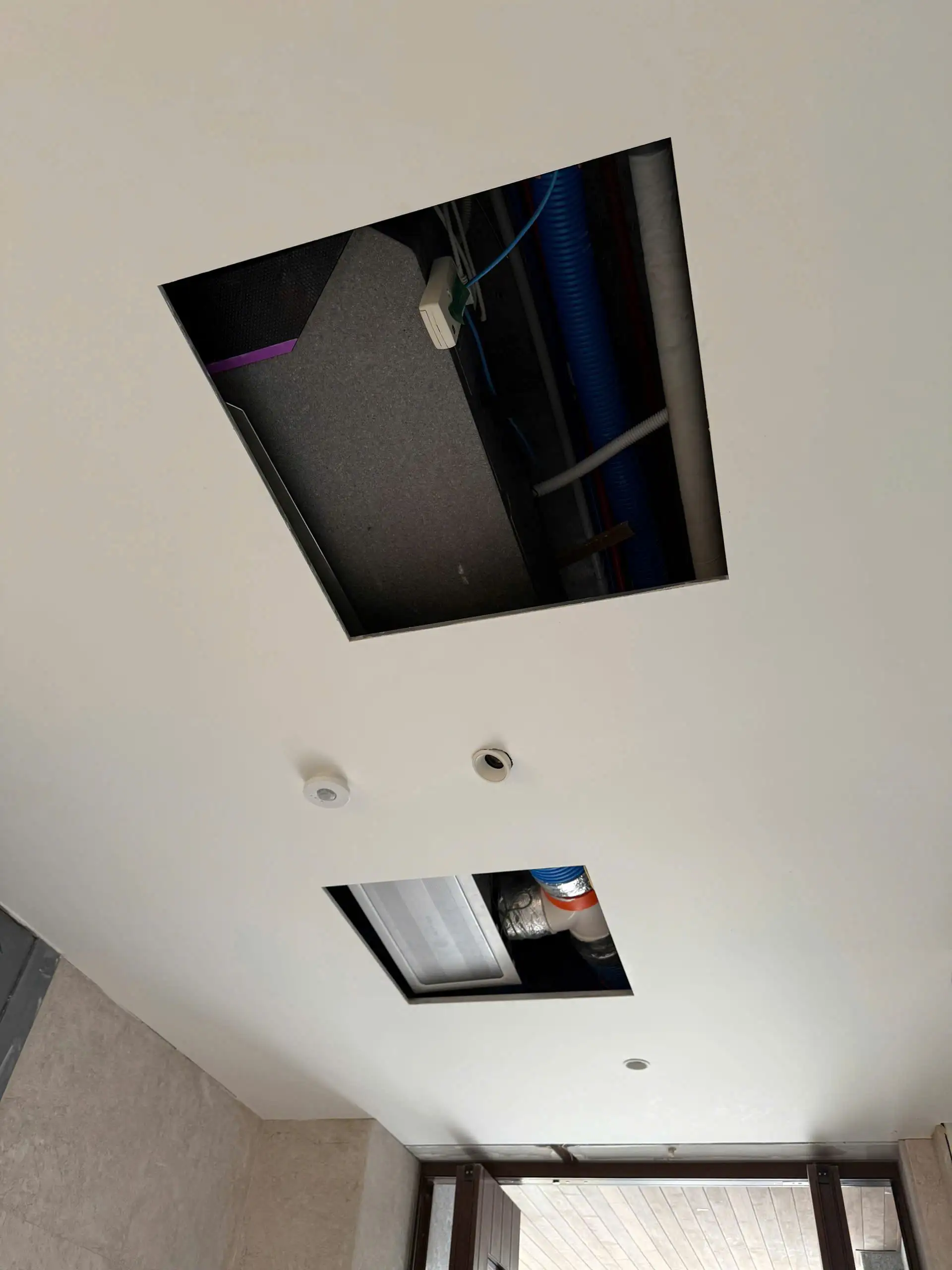
CyberVent heat-recovery main unit installation position An access panel makes inspection, maintenance, and filter replacement more convenient
The main unit is installed above the ceiling and connected directly to the ductwork system. Once the ceiling is completed, only a small access panel needs to be left at an appropriate technical position for routine maintenance tasks such as:
- Removing and replacing filters.
- Cleaning the heat-exchange core.
- Inspecting internal components.
- Servicing the unit when necessary without removing a large section of the ceiling.
The position of the unit should therefore be planned during the ceiling design stage to maintain visual aesthetics while providing sufficient space for technicians to perform maintenance.
>>>Read more: Fresh Air Ventilation System vs. Natural Ventilation: Which Is the Right Choice?
Choose a Location That Helps Balance Supply and Return Airflow
One important characteristic of the CyberVent fresh-air ventilation system is the principle of Power Symmetry.
The main unit uses EC centrifugal fans for both supply and return airflow. Therefore, the ductwork should be designed so that the resistance between the two airflow paths does not differ excessively.
To maintain this balance:
- Avoid having one duct branch significantly longer than another.
- Minimize unnecessary bends, sharp turns, and sudden reductions in duct cross-section.
- Prevent flexible ducts from being compressed, folded, or obstructed above the ceiling.
- Distribute supply and return branches appropriately according to the requirements of each area.
Proper duct design helps the fans operate under suitable loads, maintain stable airflow, and reduce unnecessary operating noise.
Reduce Duct Resistance to Support Impedance Symmetry
CyberVent is designed not only to manage resistance within the main unit but also to achieve balanced impedance throughout the entire ventilation system.
In practice, overly complex ductwork can cause airflow at individual vents to differ significantly from the original design calculations. Therefore, installation should prioritize:
- Keeping duct routes as direct as possible.
- Reducing unnecessary elbows and directional changes.
- Selecting duct dimensions that match the required airflow.
- Avoiding repeated changes in duct cross-section along the same route.
- Balancing and adjusting individual branches after installation.
This is particularly important for CyberVent because the system is designed to coordinate fan output, duct resistance, supply airflow, and return airflow throughout the entire system.
Allow Sufficient Space for Effective Heat Exchange
According to the product specifications, the CyberVent main unit uses large polymer heat-exchange cores, with a stated heat-exchange efficiency of up to 86%.
The horizontal airflow-path design allows air to pass through a larger heat-exchange surface area, reducing air velocity and increasing the time available for heat transfer.
For this reason, the installation should avoid creating airflow restrictions immediately before or after the main unit, as these may affect both airflow volume and heat-exchange performance.
Adequate technical clearance should also be maintained around the unit to prevent interference from electrical wiring, air-conditioning pipes, or other MEP systems.
Design Supply and Return Air Ducts According to Each Room
CyberVent is designed around the principle of Temperature Symmetry, which is particularly relevant for homes with multiple rooms operating at different air-conditioning temperatures.
When designing the ductwork:
- Supply and return air should preferably be located within the same area or within zones with similar temperature conditions.
- Rooms requiring higher airflow should be provided with an appropriate number of air outlets or duct branches.
- Return air from areas with significantly different temperatures should be managed carefully to avoid affecting the heat-exchange efficiency of other zones.
- The system should allow airflow to be adjusted according to actual usage requirements.
This design approach allows thermal energy from return air to be utilized more effectively before incoming fresh air is supplied back into the living space.
Combine the Main Unit with an Air Distribution System for Zone-by-Zone Control
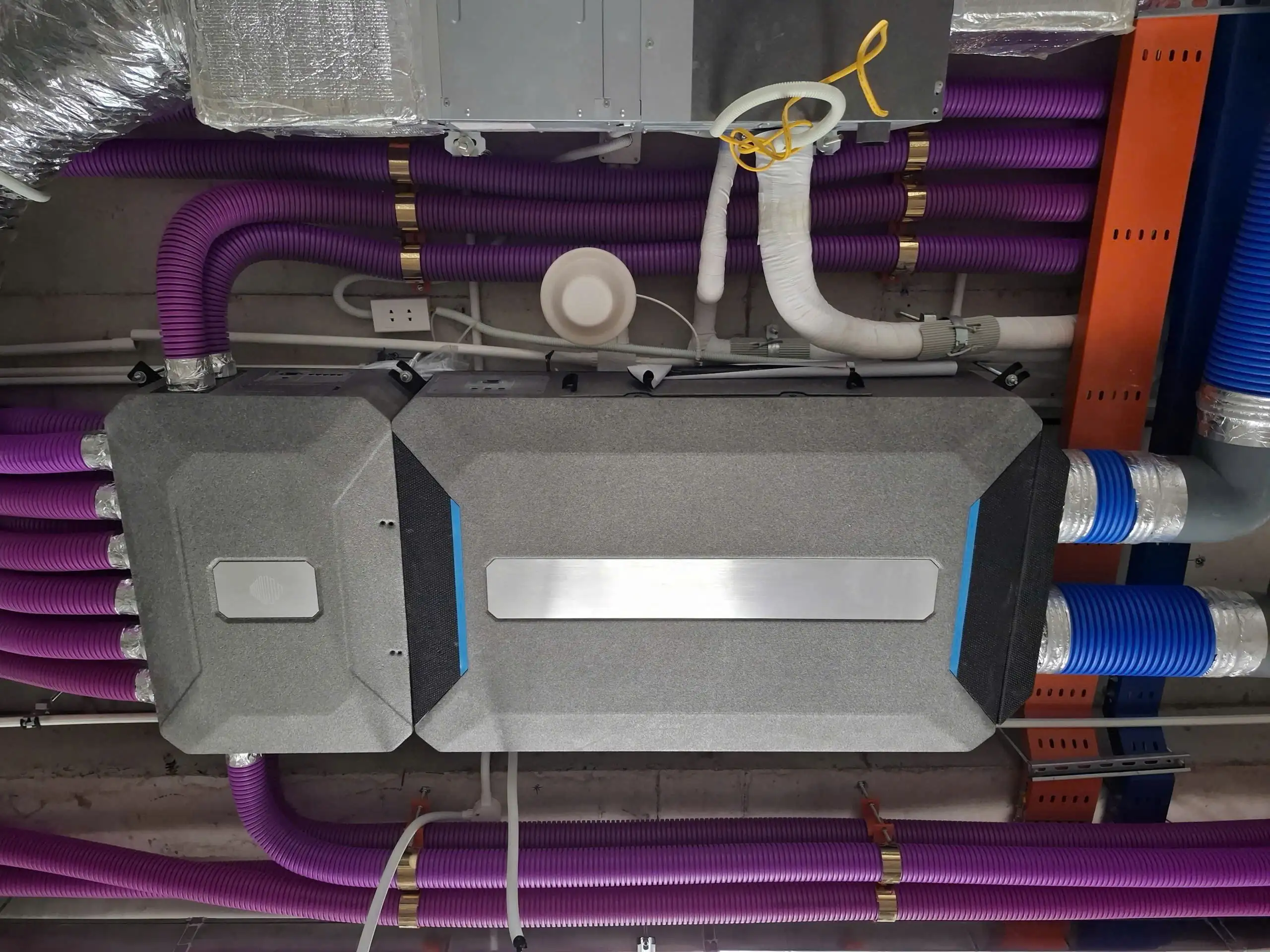
One advantage of CyberVent is its ability to provide intelligent zone-based airflow control.
Instead of supplying the same amount of air to every room at all times, the system can prioritize airflow to areas that are currently in use.
For example:
- During the day: Prioritize the living room, home office, and common areas.
- At night: Direct more ventilation toward bedrooms.
- Airflow to unused rooms can be reduced to minimize unnecessary energy consumption.
For this reason, the main unit, air distribution system, duct branches, and zoning strategy should be designed together from the beginning of the project.
Minimize Vibration and Noise in Concealed Ceiling Installations
The CyberVent main unit uses a metal housing combined with EPP material, designed to support thermal insulation and reduce operating noise. However, actual acoustic performance also depends on installation quality.
Installers should therefore:
- Secure the unit firmly while avoiding direct vibration transmission into the building structure.
- Prevent ductwork and accessories from pressing directly against the ceiling, which may create resonance.
- Avoid installing the unit directly above the head of a bed whenever site conditions allow.
- Check vibration and noise levels during system commissioning.
Proper installation helps maximize the benefits of EC fans and EPP construction, particularly in areas where quiet operation is important, such as bedrooms.
Where Should the CyberVent Main Unit Be Installed?
For the CyberVent main unit to operate efficiently, the installation location should meet five main criteria:
- Preferably install the unit above the ceiling in a central location, helping shorten duct routes and improve airflow distribution.
- Position the unit close to outdoor fresh-air intake and exhaust points, reducing the need for excessively long ducts or unnecessary bends.
- Provide a maintenance access panel for filter replacement, heat-exchange core cleaning, and equipment inspection.
- Maintain sufficient technical clearance to avoid interference with air-conditioning pipes, electrical wiring, and other MEP systems.
- Avoid installing the unit directly above areas requiring very low noise levels, such as the head of a bed or a work area, to reduce the potential impact of vibration and operational noise.
Conclusion
To achieve optimal performance, how to install the CyberVent main unit should be considered as part of the overall system design rather than as an isolated installation task.
The location of the main unit, supply and return ductwork, maintenance access, airflow resistance, and final airflow balancing should all be planned together from the beginning.
A properly designed and installed system can help CyberVent operate more consistently, reduce unnecessary energy loss, and maintain better indoor air quality throughout the living space.
If you need advice on system configuration, site assessment, or an installation solution tailored to your property, CyberVent can support your project from the design stage through CyberVent system implementation, helping optimize system performance while minimizing unnecessary costs during construction.