
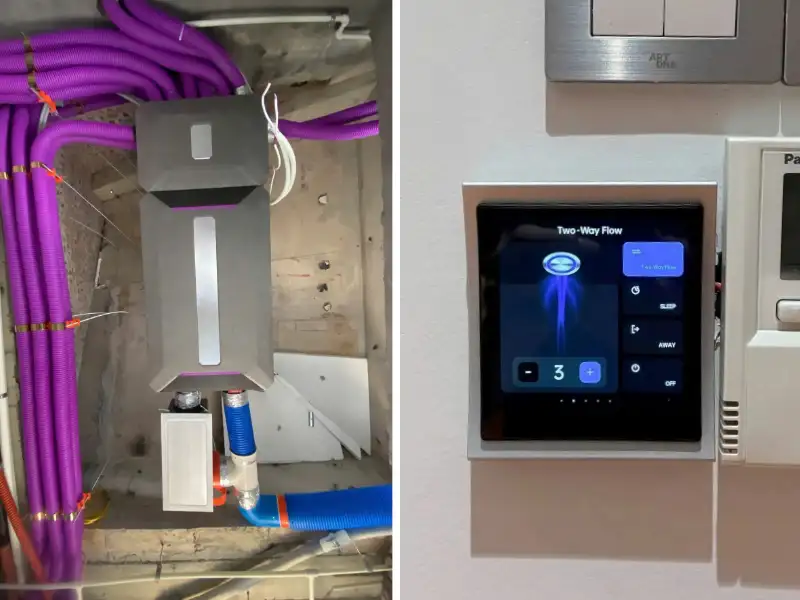
Choosing the right operating mode helps your fresh air system run more efficiently and respond better to whatever’s happening in your indoor air at any given moment. So how many CyberVent operating modes are there, and what does each one actually do? This guide walks through every mode so you can pick the right setting for your space.
How Many Operating Modes Does CyberVent Have?
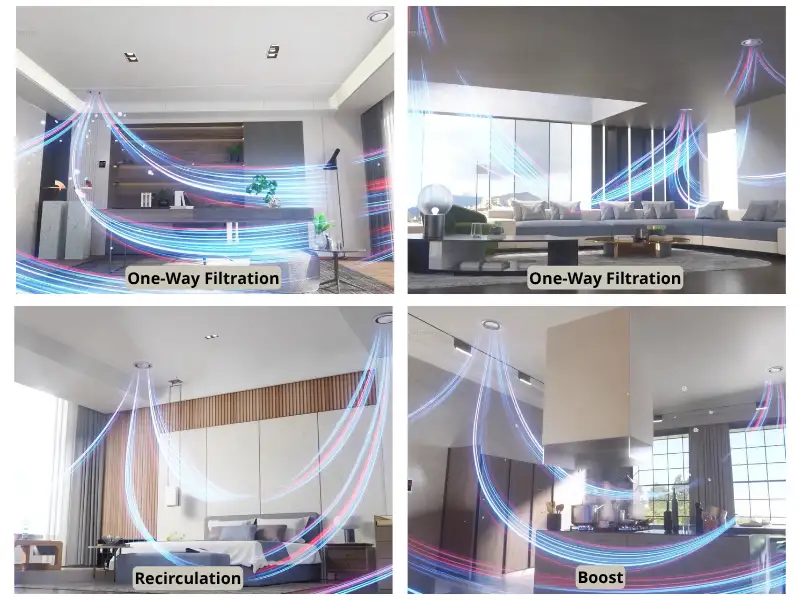
CyberVent comes with 4 core operating modes: One-Way Filtration, Two-Way Filtration, Recirculation, and Boost. Each mode is built for a different purpose — from quickly clearing an indoor pollution source to maintaining stable air quality around the clock, or focusing cleaning power on a single problem area. Understanding what each mode does makes it easier to pick the right setting for your actual air conditions.
1. One-Way Filtration Mode
One-Way mode is designed for quickly clearing pollution that’s just occurred indoors. When something like cooking smoke, cigarette smoke, or another indoor pollutant shows up, the system can run a one-directional airflow that pushes the contaminated air straight out of the house.
The strength of this mode is fast response to localized air issues. Instead of letting odor, smoke, or pollutants spread to other rooms, CyberVent creates the right airflow to push them out of the living space before they travel.
One-Way mode is especially useful when:
- A room has just picked up smoke or smell from cooking
- Cigarette smoke or another pollutant has suddenly appeared indoors
- You need to clear out poor-quality air quickly
- You want to stop contaminants from spreading to other rooms
This gives users a way to handle sudden pollution events on the spot, without having to switch the whole system to a different operating mode.
2. Two-Way Filtration Mode
Unlike One-Way mode, Two-Way mode runs ventilation and indoor-outdoor air exchange at the same time. The goal here is to keep indoor oxygen levels stable while also helping clear out pollutants that build up in a sealed space.
While running, the system can create a suitable positive-pressure environment, which helps keep outdoor pollution from leaking in through gaps or uncontrolled openings. At the same time, indoor air is continuously exchanged to reduce the buildup of things like CO₂ and other compounds that affect air quality.
One notable feature of Two-Way mode is energy exchange between indoor and outdoor airflow. This makes the ventilation process more efficient and helps limit energy loss compared to simply opening windows for natural ventilation.
This mode is a good fit for:
- Homes or apartments that stay closed up most of the time
- Spaces running AC for extended periods
- Rooms with multiple people spending time together
- Areas that need a steady, ongoing supply of fresh air
Overall, this is the go-to mode for everyday ventilation and air quality maintenance.
3. Recirculation Mode
Recirculation mode is built for times when outdoor air isn’t fit to bring directly indoors — think heavy dust, thick fog, or harsh weather conditions.
Instead of continuously exchanging air with the outside environment, the system focuses on recirculating and re-filtering the air already inside the house. Air from each room passes through the filtration system and is then redistributed back into the living space.
This creates an environment that’s relatively insulated from outdoor air conditions. Each room effectively gets cleaned air through the central filtration system, while polluted outdoor air is kept to a minimum.
Recirculation mode is a good fit when:
- Outdoor dust or pollution levels spike
- There’s heavy fog outside
- The outdoor environment has high dust or pollutant levels
- You want to keep cleaning indoor air while limiting how much outdoor air comes in
Beyond maintaining air quality, recirculation also lets the system make the most of air that’s already been treated, reducing unnecessary air exchange during unfavorable outdoor conditions.
4. Boost Mode
Boost mode is used when you need to quickly resolve pollution in one specific area of the house. Rather than distributing airflow evenly across the whole space, CyberVent can concentrate its filtering power on the area with the problem.
For example, if air quality in one room suddenly drops, the system can redirect airflow from other areas to prioritize that room. This temporarily increases the filtering and air-exchange rate in the affected zone.
According to the system’s design, Boost mode can direct a large volume of airflow to quickly treat one area — well suited to emergency clean-up situations rather than waiting for the system to run at its normal pace.
Boost mode can be useful when:
- A room suddenly develops an odor, smoke, or other pollution source
- Air quality in one area drops rapidly
- You need to prioritize cleaning one room over others
- You want to shorten air-treatment time during an urgent situation
>>>Read more: How to Install the CyberVent Main Unit for Optimal Performance?
How Does CyberVent Control Air Quality?
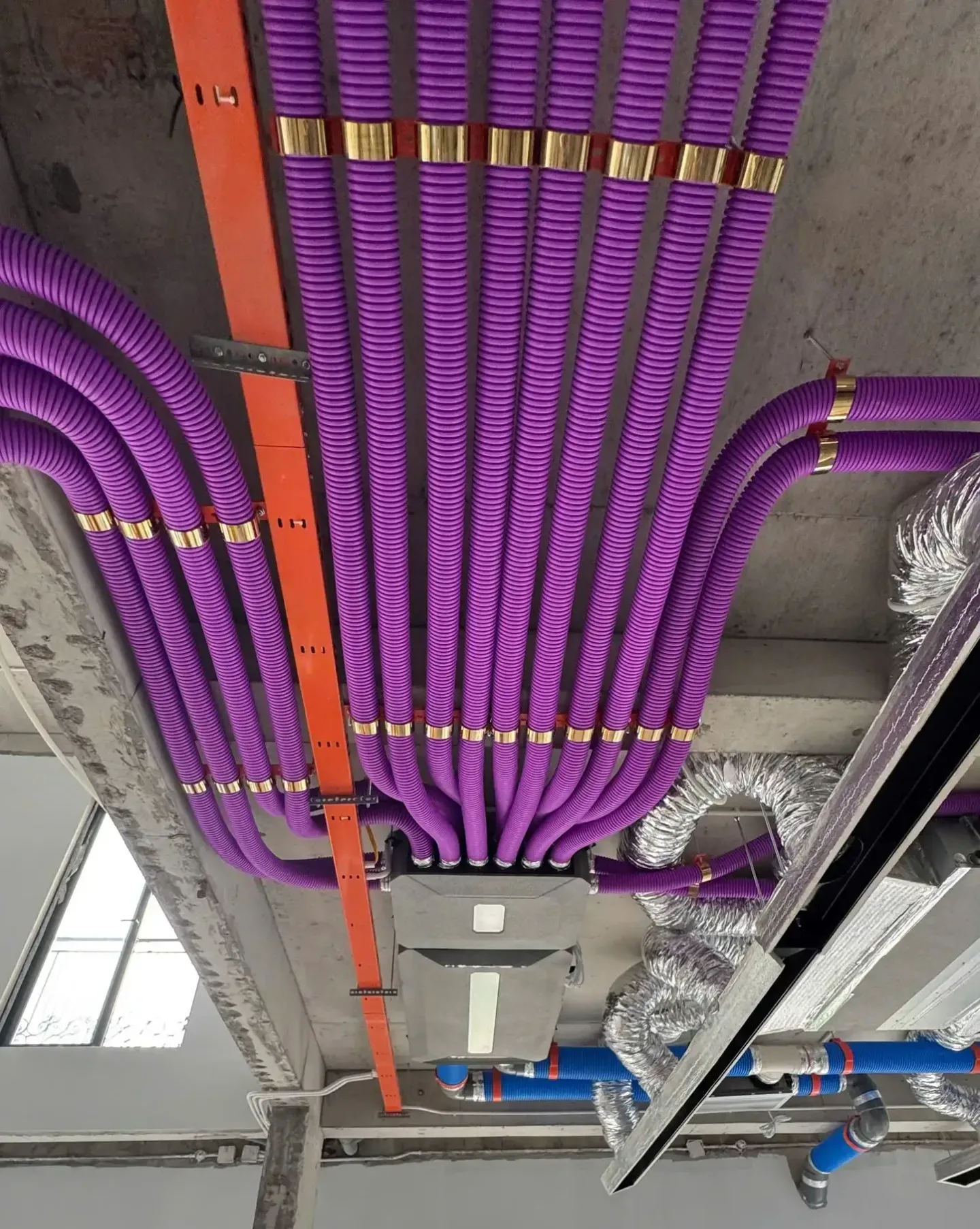
CyberVent uses an active control mechanism that combines sensors, filtration, and airflow coordination to keep indoor air cleaner and more comfortable:
- Air quality monitoring: Sensors continuously track fine dust, CO₂, temperature, and humidity to detect changes in indoor conditions.
- Pollution detection by zone: The system identifies which area has declining air quality and prioritizes it, rather than treating every room the same.
- Pollutant filtration: Air passes through the filtration system to reduce dust and contaminants before being redistributed.
- Fresh air supply: CyberVent brings in outdoor air, treats it, and supplies it indoors — helping relieve stuffy, sealed-up rooms.
- Contaminated air exhaust: When smoke, odor, or pollution appears indoors, the system creates the appropriate airflow to push it out quickly.
- Room-by-room airflow allocation: Airflow can be prioritized to whichever area needs it most, so treatment happens exactly where it’s needed.
- Flexible mode switching: CyberVent can switch between One-Way, Two-Way, Recirculation, or Boost depending on conditions and needs.
- Reduced outdoor air intake during pollution events: When outdoor air quality is poor, Recirculation mode focuses on re-filtering indoor air instead.
- Rapid response to sudden pollution: Boost mode concentrates airflow on the affected area to quickly improve air quality.
Tips for Using CyberVent’s Operating Modes
To keep CyberVent running efficiently and matched to real air conditions, keep these tips in mind:
- Match the mode to the situation. Don’t run one fixed mode for every scenario — switch between One-Way, Two-Way, Recirculation, or Boost based on actual needs.
- Don’t overuse Boost mode. It’s meant for quickly resolving localized pollution, not for continuous long-term use.
- Default to Two-Way mode for regular ventilation. It’s the best fit for sealed homes, air-conditioned rooms, or spaces with multiple occupants that need steady air exchange.
- Switch to Recirculation when outdoor air is poor. When there’s heavy dust, smoke, or pollution outside, limit outdoor air intake and lean on indoor recirculation instead.
- Keep an eye on air quality metrics. Track CO₂, fine dust, temperature, and humidity to choose the most appropriate mode.
- Clean or replace filters regularly. A dust-clogged filter can reduce airflow and cleaning performance.
- Don’t adjust technical settings yourself. Airflow, ductwork, and distribution settings should be handled by a qualified technician.
- Follow the recommended maintenance schedule. Regular servicing keeps CyberVent running efficiently, reduces noise, and lowers the risk of system issues.
The Bottom Line
Using the right operating mode doesn’t just improve filtration and fresh air delivery — it also helps optimize energy use and keep your indoor environment cleaner and more comfortable. If you need help choosing, designing, or installing a CyberVent system, reach out to CyberVent. Our team can help tailor the right solution to your space, needs, and building layout.
Contact CyberVent for a free air purification consultation.