
The right fresh air ventilation system keeps a steady supply of outdoor air coming into your space and keeps indoor air quality healthy. Not every system fits every building, though. Before you install one, look at the size of the space, how many people use it, the airflow rate, how well it filters, and how it distributes air. This guide covers 7 things to check so you can compare options and pick the right system for how you actually use the space.
1. Define Your Needs and Understand Your Space
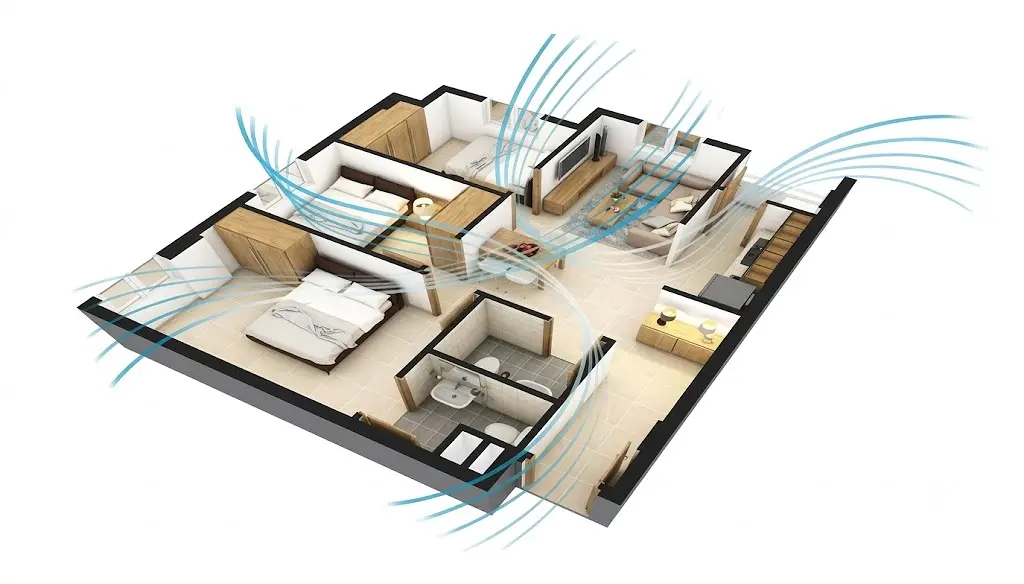
Define your ventilation needs and the characteristics of your space
Before you choose a fresh air ventilation system, work out what the space is and how much fresh air it really needs. That tells you what airflow, capacity and air distribution to look for, so you avoid both too little ventilation and wasted energy.
Key factors to consider:
- Floor area: Single-family homes, apartments, offices and industrial buildings all need different amounts of ventilation.
- Occupancy: The more people in a space, the more air exchange it needs.
- Building airtightness: Tightly sealed homes, rooms with few windows and spaces that run AC all the time need more attention to fresh air supply.
- Outdoor air quality: If you live near heavy traffic, wildfire smoke, industrial areas or high pollen, choose a system that filters air before it enters the room.
- Coverage: Decide whether you need fresh air for the whole building or only for the rooms people use most.
Getting these factors right keeps your choice matched to real needs and helps you control operating and upfront costs.
>>> Read more: 5 Things to Know Before Choosing a Home Fresh Air System
2. Calculate the Right Fresh Air Flow Rate (CFM)
Airflow is one of the most important specs to check. If it’s too low, the room air won’t be replaced often enough. If it’s too high, you’ll use more electricity and the space may feel drafty.
Calculating the right fresh air flow rate
When sizing a system, consider:
- Room area and volume: Larger spaces usually need more airflow.
- Number of occupants: Crowded areas need more fresh air for proper air exchange.
- Use of the space: Homes, bedrooms, offices, workshops and commercial areas all have different ventilation requirements.
- Building airtightness: Spaces that run AC often and get little natural ventilation need extra attention.
- Air distribution: In multi-room buildings, fresh air has to reach each area, not collect in one spot.
Don’t size a system on square footage alone. Combine floor area, occupancy and how the space is used. For large or multi-zone buildings, have an HVAC professional assess the site and calculate airflow before installation. In the US, ASHRAE Standards 62.2 (homes) and 62.1 (commercial buildings) are the usual reference points.
3. Check Filtration and Air Treatment
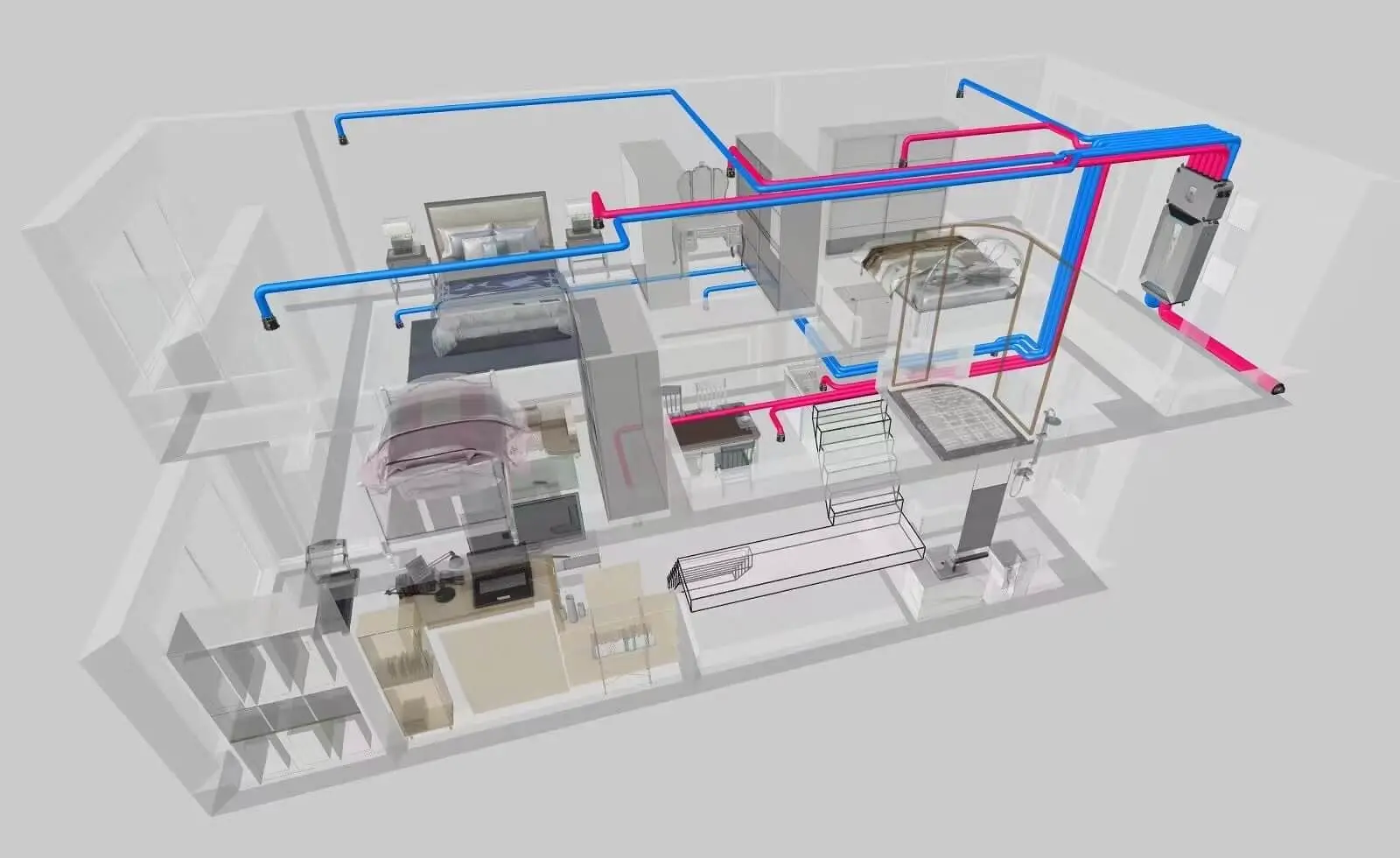
When you compare systems, don’t look only at airflow. Outdoor air can carry dust, fine particulate matter (PM2.5), smoke, pollen and other pollutants, so the system needs the right filters to keep them out of your space.
The CyberVent air handling system uses HEPAStack, a multi-stage filter with these layers:
- Pre-filter: Traps large dust and debris before air reaches the finer filters. It’s washable, which makes maintenance easier.
- F7 filter (roughly MERV 13): Catches smaller particles after the pre-filter and reduces the load on the next stage.
- HEPA H13 filter: The last stage of HEPAStack. It captures fine particles before the air is delivered indoors.
With a pre-filter, F7 and HEPA H13, CyberVent filters fresh air as it supplies it, instead of pulling outdoor air straight inside. When you compare systems, check the filter setup, filter grades, whether filters can be cleaned, and how often they need replacing, so performance holds up over time.
4. Evaluate Air Distribution to Each Zone
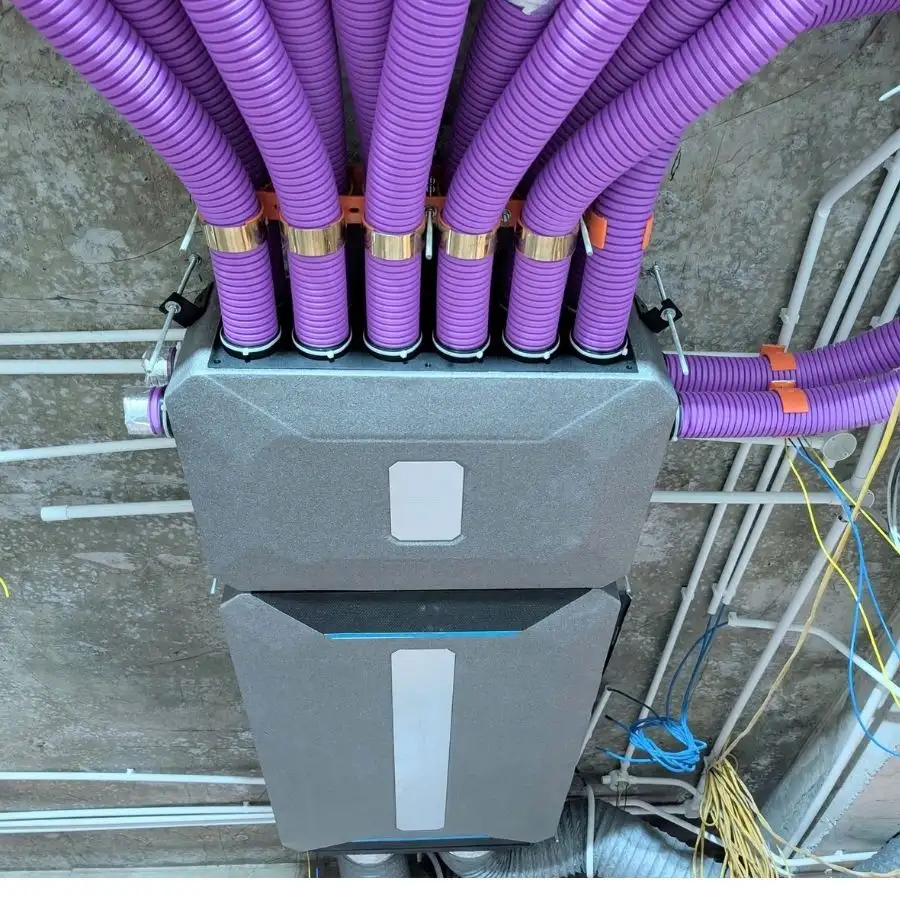
A good fresh air ventilation system has to deliver enough air and also get it to the right places. With poor distribution, some rooms get too much airflow while others don’t get enough.
Match Airflow to Each Space
Look at the number of rooms, the size of each area and how each one is used. In buildings with many rooms or functional zones, the system should let you adjust airflow per zone instead of running one fixed setting for the whole building.
This helps you:
- Deliver fresh air to each room based on its needs.
- Avoid rooms that are over- or under-ventilated.
- Adjust airflow as your usage changes.
- Improve efficiency and energy use.
CyberVent’s Air Distribution System
CyberVent uses an electronic air distribution unit that sends air to each area through ductwork. The distributor has 16 duct ports: 8 supply and 8 return.
Airflow at each duct can be adjusted independently. You can set the right amount of air for each zone instead of giving the whole building the same airflow.
In multi-room spaces like homes, apartments and offices, this makes the system more flexible and lets you manage indoor air quality room by room.
When you compare systems, look beyond total airflow. Check how air is distributed, how many supply and return lines there are, and whether you can adjust airflow per zone. These directly affect how well the system performs day to day.
5. Consider Noise Levels and Energy Consumption
Noise and power use matter a lot, especially in homes, bedrooms and offices. A quiet, energy-efficient system is more comfortable to live with over the long run.
Check Operating Noise
Noise can come from the fan, the motor and air moving through the ducts. Check the noise rating (dB or sones) and plan the layout before installation. For spaces that need to be quiet, choose equipment that runs smoothly with little vibration.
Assess Energy Use
Don’t judge by motor wattage alone. Consider airflow and overall efficiency as well. A system that adjusts airflow to demand avoids running at high speed when it doesn’t need to.
With CyberVent, you control how much air goes to each zone through the electronic distribution unit. Keep this in mind when you weigh long-term operating costs.
6. Look at Heat Recovery and Comfort Control
Heat recovery and indoor comfort control
Beyond airflow and filtration, look at heat recovery and comfort control. This matters most in homes, offices and spaces that run air conditioning regularly.
- Heat recovery (HRV/ERV): Narrows the temperature gap between incoming outdoor air and indoor air, so indoor conditions stay steadier.
- Comfort: A well-designed system brings in fresh air without rooms feeling too hot, too cold or drafty.
- Less HVAC load: Good heat recovery can reduce the load on your AC or heating when outdoor air comes in.
- Climate and building fit: Consider your local temperature and humidity, how airtight the building is, and how many hours a day the system runs.
- CyberVent: Combines fresh air supply with heat exchange. It brings in treated outdoor air and helps keep indoor conditions stable.
7. Factor in Upfront, Maintenance and Filter Replacement Costs
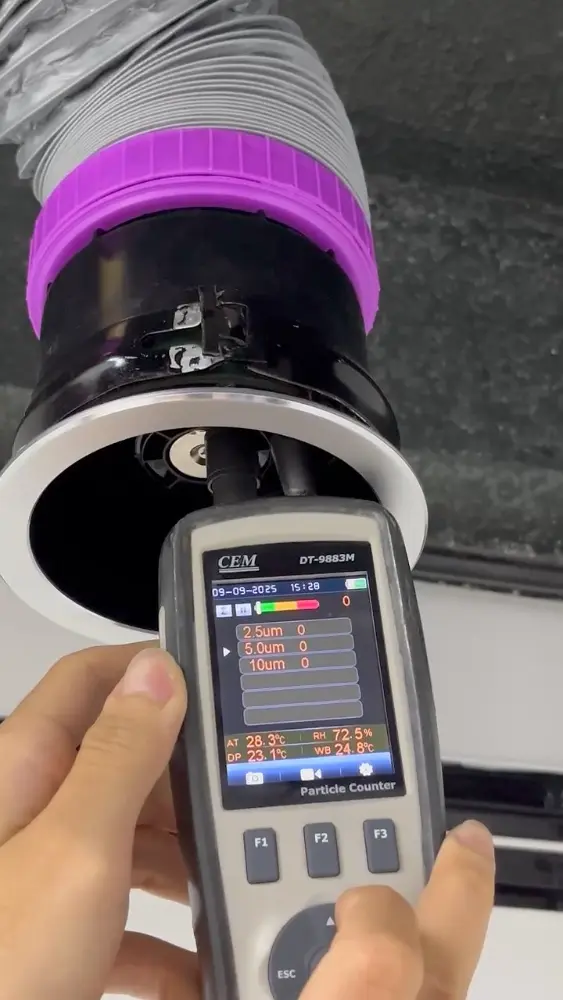
Don’t stop at the purchase price. Include operating, maintenance and filter replacement costs over the system’s life.
- Upfront cost: Equipment, ductwork, air distribution unit and installation.
- Operating cost: Electricity use and daily run time.
- Routine maintenance: Inspect and clean components and filters as the manufacturer recommends.
- Filter replacement: How often depends on outdoor air quality, how much you use the system and the filters’ actual condition.
CyberVent’s HEPAStack uses several filter stages to treat air before it’s sent to each zone:
- Pre-filter: Washable. Removes large dust and debris.
- F7: Captures smaller particles before air reaches the final stage.
- HEPA H13: Improves capture of fine airborne particles.
Checking, cleaning and replacing filters on schedule keeps filtration and airflow consistent and avoids extra costs from an inefficient system.
Final Thoughts
The right fresh air ventilation system has to deliver the right airflow, filter well, exchange air efficiently and distribute it to every zone. For buildings that need fresh air and air purification together, CyberVent is worth considering. It combines heat recovery, HEPAStack filtration and an electronic air distributor to deliver treated fresh air to each area. Whatever you choose, base the system configuration on your floor area, occupancy, filtration needs and building characteristics.
Read more:
FAQs
1. What should I look for when choosing a fresh air ventilation system?
Look at airflow (CFM), filtration, air distribution, noise level, energy use, heat recovery and maintenance costs.
2. Should fresh air flow be calculated based on the number of occupants?
Yes. Occupancy is one of the key factors for sizing airflow, along with floor area and how the space is used.
3. How do filters affect a fresh air ventilation system?
Filters remove dust and airborne particles before air enters the room. Check the filter grade (such as MERV or HEPA) and the recommended replacement schedule.
4. Should I choose a system that combines filtration and heat recovery?
It’s worth considering if your building needs fresh air, better indoor air quality and less impact from outdoor temperatures on indoor comfort.