
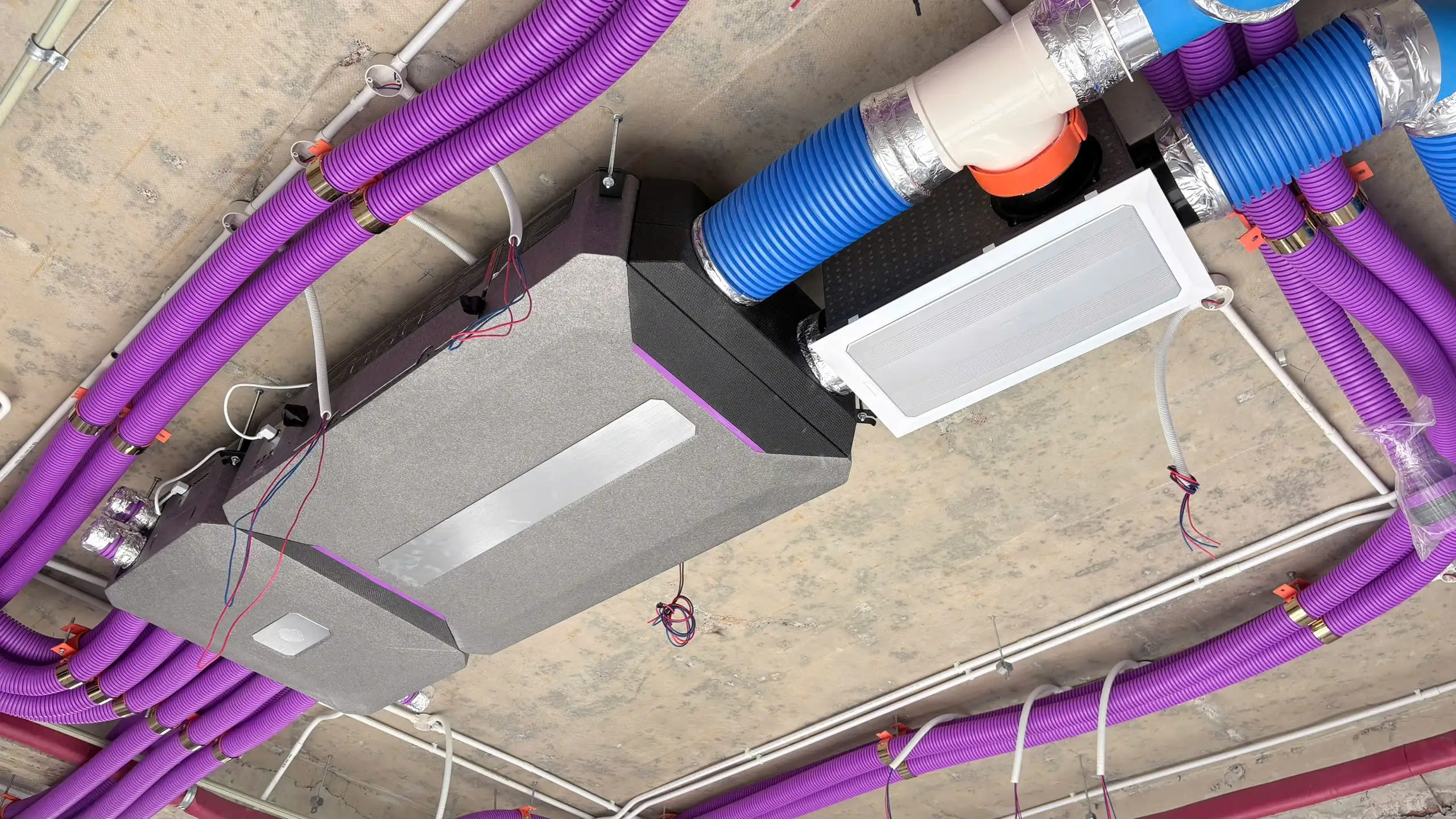
Can CyberVent be installed in an existing home? This is a common question among homeowners who want to improve indoor air quality but are concerned about removing ceilings, installing ductwork, and disrupting everyday life. Technically, CyberVent can still be installed in a completed and occupied home. However, because it is a centralized fresh-air ventilation system that requires a main unit and ductwork extending to multiple rooms, installation in a finished property usually involves more construction work, a longer installation period, and higher renovation costs.
For homes that have already been fully completed, a room-by-room fresh-air solution may therefore be a more convenient and cost-effective alternative. This article explains whether CyberVent can be installed in an existing home, when a centralized CyberVent system makes sense, when an alternative solution may be more practical, and what homeowners should consider before making a decision.
Can CyberVent Be Installed in an Existing Home?
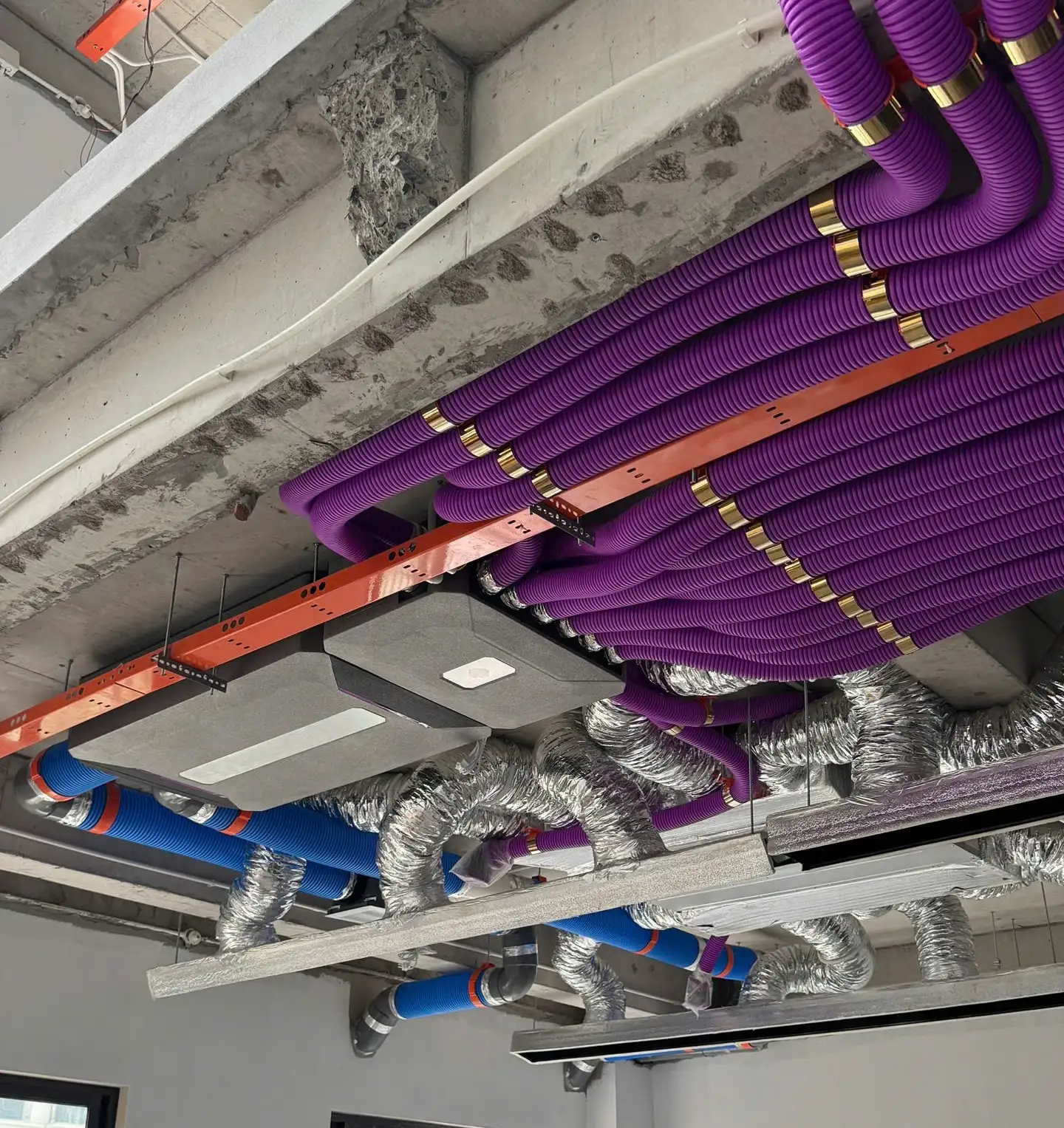
From a technical perspective, an existing home can still be equipped with the CyberVent fresh-air ventilation system.
However, it may not be the most practical option if the interior and ceiling have already been completed.
Because the CyberVent main unit is relatively large and requires a network of air ducts to distribute fresh air to individual rooms, installation may require opening or removing significant sections of the plasterboard ceiling to make space for the equipment and ductwork.
The installation process also involves more than simply mounting the equipment. Typical work may include:
- Opening sections of the ceiling.
- Installing supply and return air ducts.
- Installing and connecting the CyberVent main unit.
- Inspecting and commissioning the ventilation system.
- Restoring the ceiling and affected interior finishes.
Depending on the size, layout, and existing condition of the property, the entire process may take approximately 10–20 days.
For families already living in the home and not planning a major renovation, installing CyberVent may therefore cause temporary inconvenience due to construction work, dust, noise, ceiling modifications, and disruption to daily activities.
An Alternative to CyberVent for Existing Homes
If your home is already completed and you do not want to remove large sections of the ceiling to install CyberVent, the CyberVent AC-360 fresh-air ventilation and air purification unit may be worth considering.
The AC-360 is designed as a standalone unit and is suitable for spaces with a recommended area of up to approximately 160 m², depending on actual site conditions.
Because it does not require a whole-house duct network, installation is generally simpler and causes less disruption to existing interiors and daily activities.
Read more: How to Install the CyberVent Main Unit for Optimal Performance?
CyberVent AC-360: Faster Installation for Completed Homes
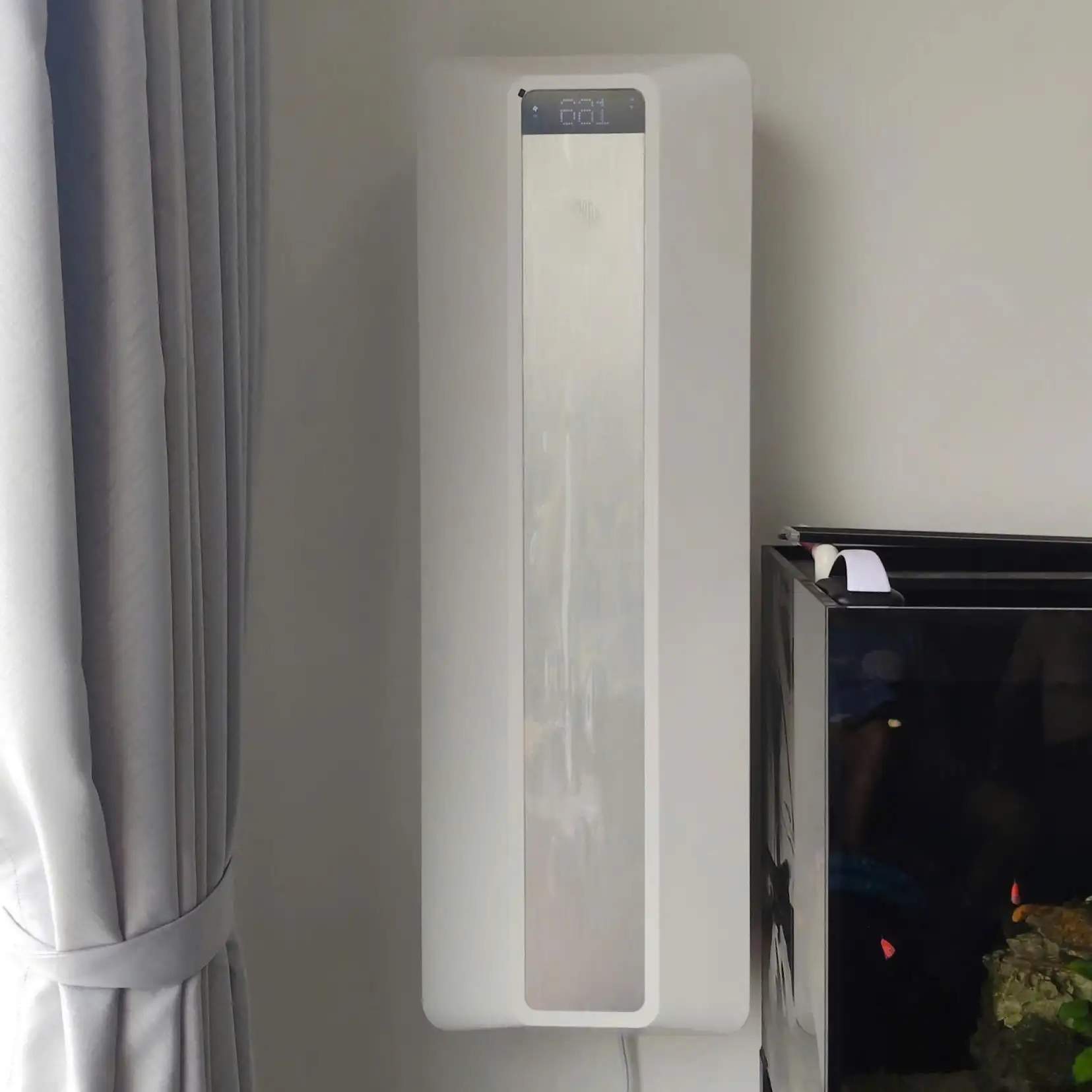
Unlike CyberVent, which requires ductwork extending to multiple rooms, the CyberVent AC-360 fresh-air ventilation and air purification unit can be installed directly in the room or area where it is needed.
During installation, technicians mainly need to create an opening approximately 15 cm in diameter for the outdoor fresh-air intake duct and exterior air vent.
The unit can be:
- Wall-mounted, or
- Floor-standing, depending on the available space.
This approach can reduce the amount of ceiling removal and interior restoration required, while also shortening the installation process compared with a centralized whole-house duct system.
Multi-Stage Filtration for Fine Particles and Airborne Odors
The CyberVent AC-360 uses a multi-stage filtration system, with individual filter sections ranging from approximately 9 to 30 cm in thickness.
The system is designed to progressively capture larger particles, fine dust, and other airborne contaminants before the incoming air is supplied to the room.
The filtration system includes:
- Stainless-steel pre-filter: Captures larger dust particles and debris and can be washed and reused.
- G4 primary filter: 9 cm thick and made with filtration material from Ahlstrom, Finland, supporting initial PM2.5 filtration.
- F9 medium-efficiency filter: 9 cm thick and made with Ahlstrom filtration material, helping capture PM2.5 and a substantial proportion of ultrafine particles around PM0.3.
- TVOC filter: Uses material from Circul-Aire to help reduce certain odors and volatile organic compounds in the air.
- HEPA H13/H14 U-shaped filter: 30 cm thick and made with filtration material from 3M USA, increasing the filtration surface area and supporting the capture of ultrafine particles, including particles around PM0.3.
The multi-stage structure not only helps improve the quality of the outgoing airflow but also distributes the filtration load across several layers, helping reduce the load placed on downstream filters.
Fresh-Air Supply and CO₂ Management
One of the key features of the CyberVent AC-360 is its ability to draw outdoor air through the filtration system before supplying it indoors.
Introducing filtered outdoor air can help improve ventilation in enclosed spaces, particularly bedrooms, living rooms, and areas where air conditioning is used frequently.
The AC-360 provides five fresh-air intake settings: 0%, 25%, 50%, 75%, and 100%, allowing users to adjust the amount of incoming outdoor air according to actual needs.
At the 0% setting, the unit operates in indoor recirculation mode, meaning that it filters the air already inside the room without introducing additional outdoor air.
Through its air-quality sensors, the unit can monitor relevant indoor air parameters and automatically adjust operation. Under suitable operating conditions, the system is designed to support maintaining indoor CO₂ concentrations around the commonly recommended level of below 1,000 ppm.
EC Motor for Quiet and Efficient Long-Term Operation
The AC-360 uses an EC motor from EBM-Papst, Germany, designed to provide stable operation, low energy consumption, and reduced operating noise.
According to the product’s technical information, the motor does not require regular lubrication for extended periods, helping simplify long-term maintenance.
The air outlet also incorporates a PTC ceramic heater, which can help warm incoming fresh air before it enters the room during colder weather. This helps reduce the sensation of cold outdoor air being blown directly into the living space.
Monitor Indoor Air Quality and Control the Unit Remotely
Users can connect the CyberVent AC-360 to the mobile app for easier device management.
Through the app, users can:
- Adjust operating modes and airflow settings remotely.
- Monitor indoor air-quality indicators.
- Check filter condition and remaining filter life.
- Schedule automatic start and stop times.
- Monitor device operation without using the physical controls on the unit.
Why May the AC-360 Be More Practical for an Existing Home?
For a completed home, the main consideration is not only the equipment price. Homeowners also need to consider renovation costs, installation time, and disruption to everyday life.
CyberVent is designed as a centralized fresh-air ventilation solution, but it requires space for the main unit and ductwork extending to multiple areas of the home.
For this reason, CyberVent is generally easier to plan and optimize when it is incorporated during:
- New-home construction.
- Major renovation.
- Ceiling replacement or redesign.
- MEP planning before interior completion.
By comparison, the AC-360 can be installed independently in individual rooms without requiring a whole-house duct network.
Therefore, for homeowners who are already living in a completed property, want to minimize ceiling modifications, and need better control over the renovation budget, a room-by-room fresh-air solution such as the AC-360 may be easier to implement.
The appropriate number of units and installation locations should still be determined according to:
- Floor area.
- Number of rooms.
- Number of occupants.
- Room layout.
- Existing building conditions.
A site survey or technical consultation is recommended before installation.
5 Questions to Ask Before Installing CyberVent in an Existing Home
Before deciding whether to install a centralized CyberVent fresh-air system in a completed property, consider the following five questions.
1. Has the Plasterboard Ceiling Already Been Completed?
If the ceiling has already been finished, CyberVent installation becomes more complicated because both the main unit and ductwork must be installed above or within the ceiling structure.
This may require contractors to open several sections of the ceiling to install the duct network and subsequently restore the affected areas.
By contrast, CyberVent can be planned more efficiently when the property is still under construction or undergoing a major renovation.
2. Are You Comfortable with Removing and Restoring Parts of the Ceiling?
Installing CyberVent in an existing home may involve more than equipment installation.
Additional work may include:
- Opening the ceiling.
- Installing ductwork.
- Adjusting other MEP systems if necessary.
- Restoring ceiling finishes.
- Repainting or repairing affected interior areas.
If the household wants to minimize changes to the existing interior, a room-by-room fresh-air ventilation solution may be more suitable.
This approach reduces the need for extensive construction work and can limit disruption to everyday activities.
3. Can Your Household Accommodate a 10–20 Day Installation Period?
For a completed home, the installation of CyberVent together with restoration work may take approximately 10–20 days, depending on the size and complexity of the property.
During this period, homeowners may experience:
- Construction dust.
- Noise.
- Temporary movement of furniture.
- Restricted access to certain areas.
- Ceiling and interior restoration work.
If you need a faster and less disruptive installation, a standalone fresh-air unit for individual rooms may be easier to consider.
4. Do You Need Fresh Air for the Entire Home or Only Certain Rooms?
If the goal is to create a centralized fresh-air ventilation system serving multiple rooms and the property can accommodate the required construction work, CyberVent may be suitable for consideration.
However, if the primary ventilation needs are concentrated in:
- Bedrooms.
- Living rooms.
- Home offices.
- Other enclosed rooms.
then an independent unit such as the AC-360 can offer greater flexibility.
This allows homeowners to invest only in the rooms where fresh-air ventilation is most needed instead of installing a centralized system throughout the entire property.
5. Does Your Budget Include Renovation and Interior Restoration Costs?
When calculating the total cost of installing CyberVent in an existing home, homeowners should consider more than the price of the equipment itself.
Additional costs may include:
- Air ducts.
- Duct fittings and accessories.
- Installation labor.
- Ceiling removal.
- Ceiling restoration.
- Interior finishing work.
For an occupied and fully completed home, these additional items may increase the total project budget significantly.
If budget control is an important priority, a room-by-room fresh-air ventilation solution can often be implemented gradually according to actual needs and available budget.
Conclusion: Can CyberVent Be Installed in an Existing Home?
So, can CyberVent be installed in an existing home?
Yes, it is technically possible. However, whether it is the most suitable solution depends on the condition of the property, the amount of ceiling work required, the available installation time, the budget, and whether fresh-air ventilation is needed for the entire home or only selected rooms.
For homes that have already been fully completed and occupied, a standalone fresh-air ventilation solution installed room by room may often be easier and more economical to implement.
If you are unsure whether CyberVent is more suitable for your home, CyberVent can assess the property based on floor area, number of rooms, existing interior conditions, and ventilation requirements to recommend an appropriate solution while minimizing unnecessary renovation work and additional costs.